

Three CAA Group Standards on GEO Officially Take Effect; Weimob Co-develops the Standards to Build a Trustworthy AI Marketing Ecosystem
2026/11/05
On October 23, the three group standards for Generative Engine Optimization (GEO), Requirements for Generative Engine Optimization Services, Requirements for Effect Monitoring and Verification of Generative Engine Optimization, and Requirements for Classification, Grading and Selection of Content Source Entities for Generative Engine Optimization, which were proposed and placed under the administration of the China Advertising Association, were officially launched and implemented.
Zhao Ying, Deputy Secretary-General of the China Communications Standards Association, Xu Yingcheng, Person-in-Charge of the Advertising Standardization Institute of the China National Institute of Standardization, and Jia Jun, Deputy Editor-in-Chief of China Consumer News, issued certificates to the participating compiling entities of the corresponding standards, jointly promoting the implementation of the standards and the standardized development of the industry. During the research and investigation of the report, Weimob, as a representative enterprise of the industry, participated in the whole process of standard compilation. At the same time, the product and service cases submitted by Weimob, after material verification and compliance sorting, were included in the first batch of the "Trustworthy GEO Typical Case" library. Chen Chong, Person-in-Charge of Weimob GEO Business, attended the event and received the certificate for participating compiling entity.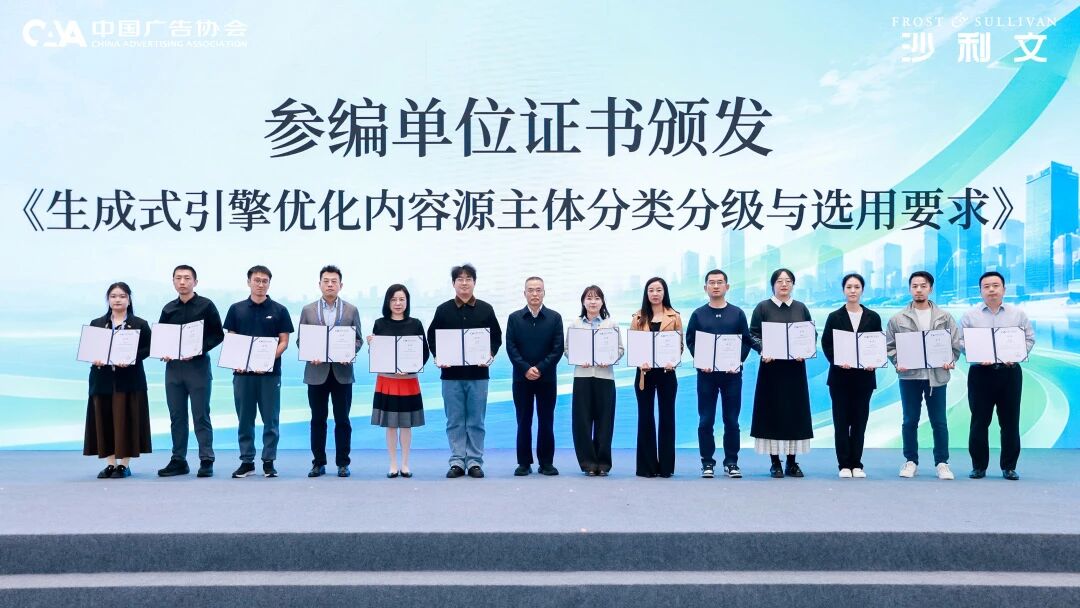
Chen Chong, Person-in-Charge of Weimob GEO Business, said that the long-term value of Generative Engine Optimization lies not only in enabling brands to be seen by AI, but also in building trust with authentic content and supporting sustainable development with standardized services. Participating in the compilation of the three CAA group standards is an important practice of Weimob in participating in the standardized construction of the GEO industry. In the future, Weimob GEO will integrate the standard requirements into the full-link services from intent insight, multi-platform monitoring, to content optimization and effect review, helping enterprises clarify brand performance, identify optimization directions, and accumulate content assets, making the service process more transparent and marketing decisions better supported. Meanwhile, Weimob will continue to cooperate with all parties in the industry to promote the implementation of standards, jointly build a trustworthy, transparent and orderly GEO ecosystem, transform technological innovation and industry co-construction achievements into customer value, and help brands accumulate long-term competitiveness in the AI era.
At present, generative artificial intelligence is deeply integrated into the full link of brand communication, enterprise marketing and consumer decision-making. As an emerging service form of AI marketing, Generative Engine Optimization (GEO) has rapidly expanding market application scenarios. However, the industry is still in the early stage of development, with frequent market irregularities and a lack of unified norms. Pain points such as ambiguous service boundaries, inconsistent effect evaluation standards, and insufficient credibility of content sources restrict the sustainable development of the industry.
Against this background, to guide market entities to fulfill compliance obligations, strictly abide by laws and regulations including the Anti-Unfair Competition Law, the Advertising Law, and the Consumer Rights and Interests Protection Law, safeguard the legitimate rights and interests of consumers and purify the marketing ecosystem, under the leadership of the China Advertising Association, forces from the industrial chain were gathered to compile the three GEO group standards. With its technical practice and implementation experience in the GEO field, Weimob was invited to participate in the compilation, and output enterprise practical experience around key topics including service processes, effect measurement and trustworthy content governance.
The three group standards released this time cover the full link of GEO service supply, effect verification and content source governance, forming a mutually supportive self-regulatory system, and providing important guidance for the industry to rectify irregularities and strengthen self-discipline. Requirements for Generative Engine Optimization Services focuses on the standardization of the whole service process, clarifying subject qualifications, implementation specifications, behavioral boundaries and compliance requirements, and providing self-regulation guidance for service business activities; Requirements for Effect Monitoring and Verification of Generative Engine Optimization focuses on closing the loop of effect measurement, unifying monitoring dimensions, sampling rules and verification methods, and solving the common long-standing problems in the industry of inconsistent evaluation standards and difficult effect verification; Requirements for Classification, Grading and Selection of Content Source Entities for Generative Engine Optimization focuses on content source governance, establishing classification and grading models and selection rules for content source entities, and consolidating the foundation of credibility norms from the information entry end.
As a participating compiling entity of this batch of standards, Weimob has deeply cultivated the Generative Engine Optimization track. Relying on the one-stop Weimob GEO solution, it has long served brands and enterprises in landing AI marketing, and accumulated a large number of practical cases in compliant content production, AI search optimization, full-link effect monitoring and trustworthy content source construction. During the discussion stage of standard compilation, combining frontline brand service practices, Weimob put forward professional suggestions on topics such as compliance risk control of service providers, quantitative effect evaluation and content credibility management, helping the standards balance compliance requirements, technical feasibility and practical usability for enterprise implementation.
The implementation of the three group standards will further improve GEO industry norms, guide service providers to operate in compliance, protect consumers’ right to know, and also provide a clearer basis for brand enterprises to evaluate service capabilities and measure the value of marketing investment.
Weimob GEO will continue to integrate the experience of standard co-construction into product capabilities and project delivery, promote more credible content construction, more transparent service processes and better-documented effect evaluation, and turn industry norms into perceptible service quality for brands. In the future, Weimob GEO will work with all parties in the industry to promote the implementation of standards, help enterprises build trustworthy brand cognition and accumulate long-term competitiveness in the AI era, and contribute practical value to the healthy development of generative AI marketing.
